Risk & Allocation
Cash swaps one risk for a slower one
Cash does not fall in nominal terms, which is exactly why it feels safe. What it loses is purchasing power, quietly and without interruption.
There is a short answer about the risk of holding cash and a useful one, and they are not the same. What follows is the useful one.
The short version
- Loss of purchasing power never appears as a fall on any statement.
- Cash held with a stated job is different from cash held by default.
- Horizon decides which of the two risks dominates.
Two different kinds of safety
Cash is safe in the sense that the number does not go down, which is the form of safety people perceive most readily. It is not safe in the sense of preserving what the money can buy, which is the form that matters across decades.
Inflation erodes purchasing power continuously, and that erosion never appears as a fall on any statement anywhere. Because there is no visible loss, the risk generates none of the emotional signal that a falling portfolio produces. This asymmetry in how the two risks feel explains a very large amount of long-term cash holding.
The compounding works both ways
A modest annual rate of inflation compounds into a substantial loss of purchasing power across a working lifetime. The arithmetic is identical to the arithmetic of returns, simply applied in the opposite direction.
Interest on cash may offset some or all of it in certain periods and fall well short of it in others. What matters is the real return after inflation, which has historically been low and at times negative for cash. None of this is a forecast, and the relationship between cash rates and inflation varies by country and by period.
Where cash is the right answer
Money needed within a few years belongs in cash, because the horizon is far too short for volatility to be tolerable. The emergency buffer belongs in cash for the same reason, with reachability rather than return as its objective.
A deliberate cash allocation for spending in retirement has a clear behavioural purpose and a measurable, acceptable cost. In each case cash is doing a specific job, and its lag against other assets is simply the price of that job. The problem is not holding cash; it is holding cash by default with no stated purpose and no end date.
Cash while waiting to invest
Money held while waiting for a better entry point is doing no job at all and is exposed to inflation throughout. The wait frequently extends because no moment ever feels obviously right, and the criteria were never written down. Writing down in advance what would trigger investing converts an indefinite wait into a decision with an actual end.
On an ordinary week, a schedule, such as investing a fixed proportion each month regardless of conditions, achieves the same thing far more reliably.
Either is better than an open-ended hold, which tends to resolve only when the story has become compelling enough to act on.
Getting a real return on cash you do hold
Rates on instant-access accounts vary substantially and move, so the account you opened years ago is rarely competitive today. Deposit protection limits mean a very large balance at one institution carries a different risk from several smaller ones. Notice accounts and fixed terms pay more in exchange for access, which defeats the purpose for an emergency buffer.
Where it helps most, money market funds and short-dated bond funds are alternatives with different risks, charges and access characteristics. Which of these suits depends entirely on what the cash is for, which is why the purpose has to be decided first.
Holding both risks at once
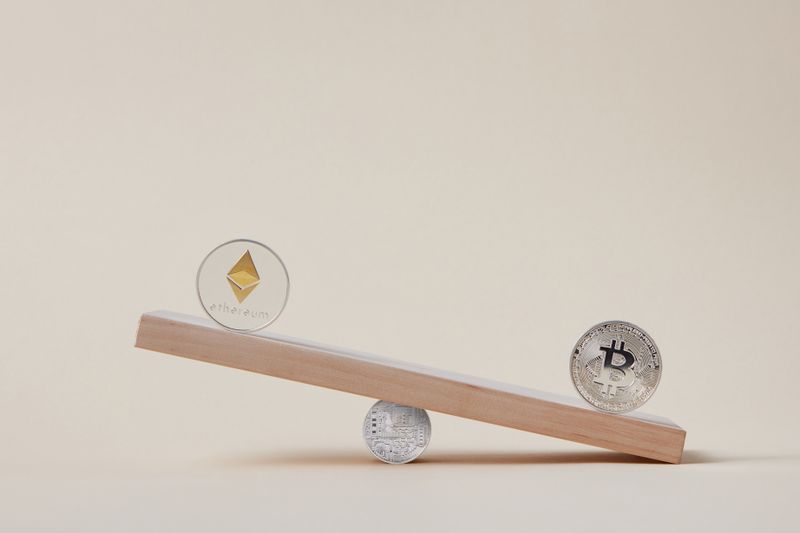
Every portfolio holds a mix of the risk of falling and the risk of not keeping up, and that mix is the allocation decision. Weighting entirely towards avoiding falls guarantees exposure to the other risk, which is the trade nobody frames explicitly. The horizon decides which risk dominates, since short horizons make volatility decisive and long ones make inflation decisive.
Stating which of the two you are more worried about, and why, is a more useful exercise than most risk questionnaires. How much of each is appropriate for your circumstances is a matter for regulated advice rather than a general rule.
The takeaway
Cash is not the absence of risk. It is a decision to carry the slow one instead of the visible one.
Pick the one that costs you least, and let the rest wait.
Questions readers ask
Is cash actually risky?
It carries no risk of a nominal fall and a continuous risk to purchasing power. Which matters more depends almost entirely on the horizon.
How much cash is too much?
There is no general figure. The workable test is whether every part of the cash has a stated job and, where relevant, an end date.