Behaviour
Ask what you would tell a friend holding this
People give clearer advice to others than to themselves. The gap is wide enough to be worth exploiting on purpose.

Most explanations of self-distanced decision making stop at the point where it starts to matter. This one carries on.
The short version
- Describing a situation in the third person strips out the emotional detail.
- It works best on whether to act and worst on how much risk suits you.
- Keeping the descriptions builds a record of your own patterns.
The advice gap
Asked what a friend should do in a described situation, people generally give clearer and more consistent answers than they give themselves. The effect appears across many decision domains and has been studied under the heading of self-distancing.
The proposed explanation is that distance strips away emotional detail and leaves the structure of the problem visible. The evidence for the effect existing is more robust than the evidence for any single mechanism producing it. For investing decisions this matters because emotional detail is exactly what drives the most expensive choices.
How to use it
Describe your own situation in the third person, in writing, as though it belonged to somebody you were advising. Include the numbers, the horizon and the constraints, but deliberately leave out how you happen to feel about any of it. Then answer as you would answer a friend, and write that answer down before returning to your own perspective.
On an ordinary week, the gap between that answer and your instinct is the part of the decision being driven by something other than facts. This takes about ten minutes and works far better before a decision than as a justification produced afterwards.
Why it works during a fall
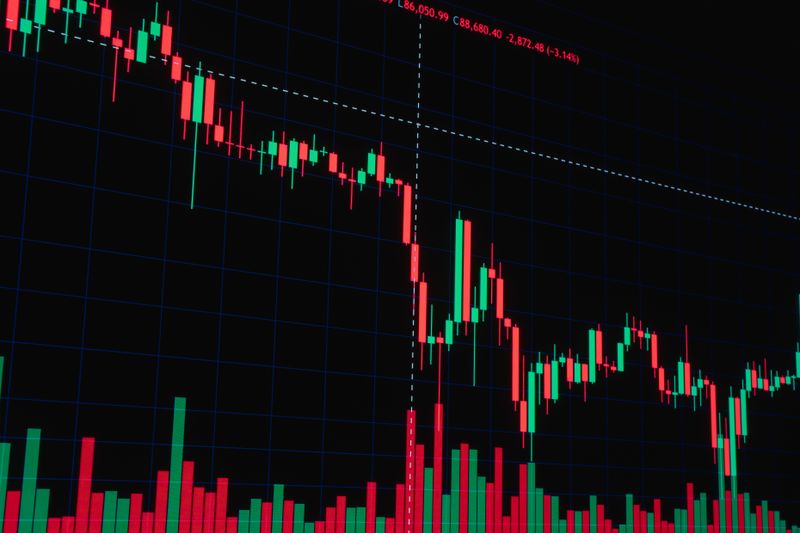
During a decline the salient facts are the balance and the daily movement, and both of them dominate attention completely. Described in the third person, the same situation usually contains a long horizon, continuing contributions and no immediate need for the money. Those are the facts that determine the sensible answer, and they are precisely the ones that attention removes.
People routinely advise others to hold while selling themselves, and the inconsistency becomes visible only when both are written down. Doing the exercise in advance, describing a hypothetical fall, is even more useful than doing it during a real one.
The limits of the technique
Distance removes emotional noise, and it also removes information that genuinely matters, such as your real capacity to tolerate loss. Advice given to a friend tends to be more conventional and less tailored, which is not always an improvement.
It works best on questions of whether to act and worst on questions of how much risk actually suits you. The technique is a check on impulse rather than a substitute for knowing your own circumstances properly.
Anything with tax, legal or wrapper consequences still needs local advice, however clearly you have described the situation.
The related questions
Asking what you would think of this decision in ten years achieves something similar by moving distance in time rather than person. Temporal distance tends to reduce the weight of immediate discomfort and raise the weight of longer-run consequences. A third variant is asking what advice you would give your own child if they were in the same position.
Where it helps most, all three work by the same route, which is separating the decision from the person currently feeling everything about it. Using whichever version comes naturally works better than forcing a technique you find awkward to apply.
Adjust the size of it until it is something you would actually do tired.
Building it into the process
Add a line to your written plan requiring the third-person description before any change to your holdings. That single requirement converts an impulsive decision into a short written exercise with a delay built into it. Keep the descriptions, because reading old ones back is the most persuasive evidence available about your own patterns.
The useful part is this: over a few years the file becomes a record of which reactions turned out to be signal and which were noise. Almost everybody who keeps such a record concludes they acted more often than they remember, and should have acted less.
The takeaway
Write it down as though it were somebody else's problem. The answer arrives faster and it is usually better.
Small and repeatable beats ambitious and abandoned, almost every time.
Questions readers ask
Is this just talking yourself out of decisions?
It is a delay plus a change of perspective. Decisions that are sound generally survive both; reactions to a headline generally do not.
When does it not help?
On questions about your own capacity for loss and your own circumstances, where the removed detail is exactly the information that matters.